Facebook Badge

Showing posts with label SAFETY. Show all posts

Thursday, May 23, 2013

Chemicals linked to rising health problems

Toxic chemicals are linked to some cancers, birth defects and low birth weight, autism, and learning and behavioural disabilities. Many parts of the world today are seeing escalating health problems and more and more countries are linking this to the chemical legacy.
 
In Canada, for instance, the government has found that 12% of children there have asthma, possibly a 4-fold increase since the 1970s. Among young Canadian adults, aged 20-44, thyroid cancer has been rising at a rate of 4.2% in men and by 6.6% in women annually.
Non-Hodgkin’s lymphoma has risen by 3.5 and 4.2%, respectively; lung cancer by 1.9%; brain cancer by 2% in women; and testicular cancer by 1.7% (The Ottawa Citizen, 11.12.06).

By the Ontario Medical Association’s conservative tally, air pollution alone – ground-level ozone and fineparticle pollution – prematurely kills more than 5,800 people in the province every year, triggers more than 16,800 hospitals admissions, 60,000 emergency room visits and more than 29 million minor illness days at a combined price tag of $7.8 billion, estimated to increase to $12.9 billion by 2026.

In the US, scientists have found that US residents have the world’s highest levels of perfluorochemicals in their bodies. Perfluorochemicals are a family of manmade chemicals that have been used for decades to make products that resist heat, oil, stains, grease and water. Common uses include nonstick cookware, stain-resistant carpets and fabrics, as components of firefighting foam, and other industrial applications. It takes the body at least 8 years to rid itself of these chemicals.

The US is also seeing a rise in certain diseases and health problems. Over the past 50 years, as infectious childhood diseases like polio, smallpox, rheumatic fever, and diphtheria have largely been controlled, chronic conditions of less obvious origins have taken their place. Asthma, autism, attention deficit and hyperactivity disorders (ADD and ADHD), childhood brain cancer and acute lymphocytic leukaemia have all increased over the past 30 years.

In addition, 5-10% of American couples are infertile. Up to half of all pregnancies end in miscarriage. 3-5% of babies are born with birth defects.

Scientists cannot fully explain these increases, but early life exposure to environmental pollutants is a leading suspect.

And what will this lead to?
In the article, “Rejecting the Toxic Plague: War on Plastic”, author Jan Lundberg, says:

“Most North Americans urinate plastics. Sperm counts are at an historic per capita low. Cancer is an epidemic.

Birth deformities, sex organ abnormalities and eventual cancers are becoming more common – all traceable to certain Chemical exposures to the fetus. If the human race is not driven extinct by nuclear holocaust or complete distortion of the climate, it may happen through wonderful plastic and other petrochemicals.”

Hormonal hazards
In recent years, scientists and lawmakers have become more concerned about pollutants in the environment that appear to interfere with natural hormone systems.

Hormones play many critical roles in controlling growth and development in early life, such that any interference could have serious and irreversible effects on child development with consequences that may be felt throughout their later lives.

“There’s a lot of concern that a lot of chemicals to which we are exposed routinely, and without our knowledge, are interfering with the way hormones work,” said R. Thomas Zoeller, a professor of biology at the University of Massachusetts at Amherst.

Here are 2 of the most widely known examples, as cited in a Washington Post article (4.12.06):

Bisphenol - A (building block for plastics). Found in: Clear plastic bottles such as those used by hikers and infants, as well as resins used to line food and drink cans. Results of research: In animals, low doses have been linked to low sperm production, altered growth and behavioural changes. The chemical industry, however, says other studies show that the chemical is safe.
Phthatates -  (chemical additives that increase plastic’s flexibility). Found in: Flexible vinyl toys, wallpaper and electronic devices. Results of research: In animals, these chemicals affect the functioning of male brains and sex organs. In humans, one recent study found a correlation between mothers’ exposure and subtle developmental changes in baby boys.
The chemical industry, however, says that there is no proof that human health is at risk.

Over 300 chemicals are found in our bodies. Find out how you can reduce exposure to these toxic chemicals in the CAP Guides, Contaminated Humans, Chemical Hazards and Going Extinct

Disposing of household nasties-safely

Wondering what to do with all those chemical nasties lurking in your cupboards? Here's how to dispose of them safely.
 

Next time you have a big clean-up, stop and consider what happens to all those old medicines, pesticides, pool chemicals, cleaners, paint thinners and batteries after you've thrown them in the bin or down the sink, or hosed them down the gutter.
 
Some chemicals become more dangerous when mixed with other chemicals, food scraps or even just water. Some things are hazardous because they contain heavy metals and other poisons that contaminate soil and pollute waterways.

Flammable chemicals and sharp objects pose a serious risk to others -- such as waste collectors and handlers, children and curious animals -- when they're sitting in your garbage bin and going into the garbage truck.

Clearly you don't want all these nasties sitting around your house either, endangering the health and safety of you and your family. So what do you do with them?

The following are some health and environmental hazards associated with products commonly found in the home, and options for their safe disposal.

Paint and related products

Paints, thinners, varnish, wood stain, solvents, methylated spirits, turps, glues and fillers.
 
The problems:
 
• They can be highly flammable.
• They can give off toxic fumes when they evaporate or burn.
• They can be toxic to plant, animal and aquatic life, as well as people.
• Aerosol cans are potentially explosive if heated or punctured.
• Oil-based paints contain flammable solvents, and brushes have to be cleaned with turps, another disposal problem.
 
The solutions:
 
• Use water-based paints rather than oil-based whenever possible.
• Calculate the area to be painted, and buy the smallest tin of paint that will meet your needs.
• Never pour these products down the sink or an outside drain.
• Use up the products, or give them to friends or neighbours who can use them. There may be a paint collection centre near you for community projects.
• Old paint that has hardened can be thrown out with your normal garbage. Leave the lid off the tin if there isn't much left (preferably outside, so the fumes don't cause harm), or pour it over newspaper, let it dry, then throw it away.
• If none of these options is practical, phone your local council for advice.
Medical waste
Medicines, needles and syringes (including veterinary products).
 
The problems:
• If left around the house, expired or left-over medicines pose a safety risk, particularly to children or people with poor eyesight.
• If you dispose of them in your household garbage, children or animals could be poisoned.
• Putting medicines down the toilet or sink can affect sewage treatment (which depends on bacteria and other organisms to break down waste).
• Used needles and syringes pose a health and safety risk to waste handlers, children and curious animals.
The solutions:
• Don't put bottles containing pills or liquid medicines in your garbage.
• Take unwanted pills out of their packaging, and wrap them in newspaper. Soak the newspaper thoroughly to dissolve and dilute the pills, put it in a plastic bag and then dispose of it with your normal garbage.
• For liquid medicines, if there's only a small amount left, pour it onto several layers of absorbent paper, wrap securely in a plastic bag and put it in your garbage bin.
Household cleaning products
Ammonia, chlorine bleach, disinfectant, dry cleaning fluid, drain cleaners, polish and oven cleaners.
 
The problems:
• Some cleaners give off dangerous (and potentially lethal) fumes when mixed -- some toilet cleaners with bleach, for example.
• If you tip large quantities down the sink or toilet, they can interfere with the bacteria which break down waste in the sewage treatment process.
The solutions:
• Never put them down the sink or drain. (Some will obviously go down the sink while you're cleaning, but in small quantities they won't do a great deal of harm. However, heavy use can kill bacteria in the sewerage system and may harm human health and the environment.)
• Use up the products, or give them to friends or neighbours who can use them.
•Use less hazardous alternatives where possible.
 
Batteries
 
The problems:
 
• The cadmium in nickel cadmium rechargeable batteries (NiCads) is a highly toxic heavy metal.
• Car batteries contain lead and highly corrosive acid.
 
The solutions:
 
• Nickel metal hydride rechargeable batteries (NiMHs) don't contain toxic material and can be disposed of with your household waste.
• Using rechargeable batteries will mean fewer batteries going to landfill.
• Never burn batteries -- this releases dangerous fumes and can cause an explosion.
• For your old car battery, check with your local garage or car battery retailer -- they might take it from you. When you're transporting one, handle it very carefully and make sure the acid doesn't leak out.
 
Fuels, oils and other flammables
 
The problems:
 
• Fuels are highly flammable and dangerous to store around the home. If you don't need it, don't keep it.
• Used motor oil contains a number of toxic chemicals, and may contain lead.
• Oil and water don't mix: don't put motor or cooking oil into the sewerage or stormwater system.
The solutions:
• Used motor oil can be recycled Ñ your local garage or tip might take it. (Ask your mechanic, at your next grease and oil change, if they recycle motor oil.)
• Collect used cooking oil in a sturdy plastic bottle and throw it out with your regular garbage.
 
In Brief
• Think before you throw it out and does the product pose a danger to people, pets and other animals, or the environment?
• The best way to avoid future problems of disposing of dangerous products is to buy and use non-hazardous alternatives wherever possible. And only buy what you really need, in the quantity you need.
 
Do's and don'ts
Do:
• Use non-hazardous alternatives wherever possible.
When you have a choice of pack sizes, buy only as much as you need.
• Give left-over chemicals to someone who can use them.
• Store chemicals carefully in a dry, well-ventilated area, safely locked away from children and pets.
• Leave products in their original containers, and write the purchase date on the label.
• If you're taking chemicals to a hazardous waste depot, make sure they're packed securely and labelled clearly.
Don't:
• Store chemicals in food or drink containers.
• Tip hazardous chemicals down the sink or toilet -- a sewage treatment plant can't break down all toxic substances, and they could create potentially explosive fumes at the plant. Some chemicals interfere with the biological processes used in breaking down sewage.
• Put hazardous chemicals (including motor oil) down the drain or hose them into the gutter -- they'll go directly into your local waterways.
• Bury them -- they can poison local plants and wildlife, contaminate soil and leach into the groundwater system.
•Unless stated otherwise in this article, don't throw them in the garbage bin. Seemingly harmless on their own, chemicals can react with other substances, possibly creating dangerous fumes, and even a fire or explosion in the garbage truck or waste centre. In landfill, they can leach into the soil and the groundwater system.

Crane Accidents-who is responsible?

The Consumers Association of Penang (CAP) is increasingly worried about the substantial number of accidents involving cranes at construction sites in this country.  Most of these cases are caused by non-compliance of basic safety guidelines as stipulated by the Department of Occupational Safety and Health (DOSH).
In May 2007, two contractors and a crane manufacturer were charged in court over a construction site accident which claimed the life of an Indonesian construction worker. He was killed when the cable of a crane holding 1.5 tonnes of metal rods snapped and crashed down on him. The contractors were prosecuted by DOSH for failing to provide sufficient supervision of worker safety, failing to provide a safe working environment, failing to establish safe work procedures, failing to provide information to workers on dangers, safety measures and precautions and failing to manage the safety of workers during the crane’s operation. The crane manufacturer however, was charged with failing to conduct monthly inspections of the crane. DOSH’ concentrated efforts in bringing the guilty party’s to justice was worthy of praise. Unfortunately, this lesson was lost on many other construction contractors who continued to neglect safety recommendations with regards to their cranes.
In March this year, another crane mishap occurred; this time on the Penang Bridge. Although no one was hurt in the accident, it inadvertently caused massive traffic congestion due to the mismanagement of the crisis by the relevant authorities. According to a media report, the accident involved a mobile crane toppling over after “a cable connected to the crane became entangled with a bridge pile structure as it was being used to lift a demolished parapet.”
CAP questions how this could have happened. Were all safety precautions taken beforehand to ensure that the cable did not slack sufficiently to cause entanglements during the operation? Did the person responsible for the crane carry out a complete inspection and testing of the crane before operations, as per DOSH guidelines? And how was it that a simple cable entanglement caused the massive mobile crane to tip over when the basic principle of a crane’s operations depends on the magnitude of load that is permitted to be lifted being necessarily less than the load that will cause the crane to tip, thus providing a safety margin. The obvious question that arises here is if the crane was overloaded beyond its hoisting capacity. Was the weight of the demolished parapet specified after responsible checking of the load and determined to be safe in line with DOSH guidelines?
Additionally and in adherence to these guidelines, is the crane operator registered with DOSH and does the crane possess a valid certificate of fitness from them? Were daily, weekly and pre-operation inspection and testing carried out by the crane’s manufacturer and DOSH? Were all DOSH guidelines pertaining to crane operation safety enforced by the main contractor?
DOSH regulations for safe and responsible crane operations as specified in its “Guidelines for Public Safety and Health at Construction Sites” are unambiguous and well defined despite being minimal. There is no reason or excuse by any agency or party involved in crane operations; mobile or otherwise to be ignorant or negligent in complying with these potentially life saving guidelines.
The question of responsibility and accountability also arises. Last year, the Minister for Human Resources, Datuk Dr S Subramaniam assured us that 'professionals' will be made responsible for workplace safety. He said, "If a crane accident occurs at a construction site, we want the engineers involved in ensuring the crane's safety to be answerable." He added that this was among the measures taken to ensure organisations implement well-defined safety and health practices for their workers and that these 'professionals' should ensure a safety mechanism is in place.
CAP concurs with the Ministers call for responsibility in ensuring the implementation of safety and health mechanisms at construction sites and accountability in dealing with crane accidents by the “professionals” concerned. With the onus put by the Human Resources Ministry on main contractors to take responsibility for worksite safety, CAP urges the responsible parties to be accountable to the relevant authorities by revealing to them details of the potentially life-threatening crane accident on the Penang Bridge.
CAP also calls for the team of forensic engineers with DOSH to reveal the findings of their investigations into the accident and in the process, play a central role in establishing a benchmark for the conformance to their Guidelines by all in the construction industry of Malaysia.
 

Crane Crush:Review safety and inspection regime

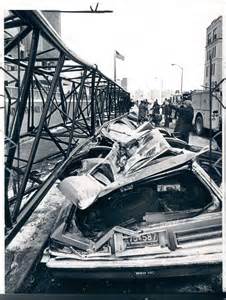
CAP urges the Government of Malaysia to review its safety and inspection regime in construction sites and work places in view of the recent crane mishap off Jalan Ampang in Kuala Lumpur.  

The Department of Occupational Safety and Health (DOSH) should investigate the cause of this recent crashing of the crane. Was it due to human error, deficiency in inspection regime of cranes at construction and worksites or faulty mechanism?
It was fortunate that there were no fatalities or casualties in the crane crash. Nevertheless, a number of cars were crushed and its occupants escaped unscathed when the huge crane set atop a 36-storey building under construction in Jalan Binjai fell.
In view of the spate of accidents, it is necessary to review the current inspection procedure undertaken by DOSH. It was perceived that there would be less crane-related accidents if cranes are handled by registered, certified crane operators approved by DOSH, besides the periodical inspection conducted by DOSH officers. However the number of accidents, fatality and casualty statistics in the past show that more stringent measures need to be taken.

Crane operators must be well trained, knowledgeable, highly skilled and strict safety precautions must be followed when operating the crane. A designated competent person should inspect the crane and all crane controls before use.

After past accidents at workplaces, CAP had called for an independent inquiry to assess the role and functions of DOSH besides reviewing the Occupational Safety and Health Act to ensure overall safety, health and welfare of all workers and the public. This has yet to be done adequately.

Hence in view of the number and nature of accidents at workplaces, the review of OSHA and all safety regulations and procedures must be expedited to safeguard workers and the public.

Press Release - 10 February 2012

Handling Toxic chemical need safety control

Consumers’ Association of Penang (CAP) views with concern the incident in Shah Alam where 31 students of a school there fell ill and had breathing difficulties – apparently following the release of a toxic chemical known as ethyl mercaptan.

Exposure to ethyl mercaptan can cause headaches, weakness, fatigue, nausea, lack of coordination and irritation of the mucous membranes. Children are naturally more vulnerable.

Petronas Gas Shah Alam area manager, Mohd Isa Adam, was quoted in the press stating that there was no gas leak but that this chemical used to odourise natural gas, was released during a routine service check at the station.

The police and Fire & Rescue Department staff had to cordon off the road leading to the station during the cleaning-up operations, while workers from Kualiti Alam sealed several drums believed to contain the chemical.

Firstly, is a gas station supposed to be so close to a school to the extent that children can be adversely affected by its chemical operations? Secondly, were safety measures followed, and if so, why did this “accident” happen – requiring young children to be sent to hospital and a road to be cordoned off for clean-up, and for drums to be sealed?

According to the Guidelines of the US National Institute for Occupational Safety & Health and the Centers for Disease Control, during ethyl mercaptan operations as a fuel gas odourant, the recommended safety controls include “process enclosure” and “general dilution ventilation”.

Workers handling this chemical also have to be protected with a prior thorough baseline health status evaluation and regular medical surveillance for any anticipated occupational risks.

CAP calls on management of PETRONAS, the Department of Environment (DOE) authorities and also Department of Occupational Safety and Health (DOSH) authorities to throw more light on the circumstances surrounding this mishap and the measures taken nationwide to prevent any repeat occurrences.
Related Posts Plugin for WordPress, Blogger...